

Aravali mining row: Supreme Court takes suo motu cognisance; hearing set for Monday | India News
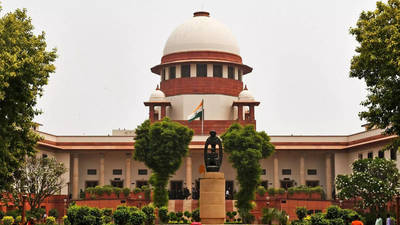
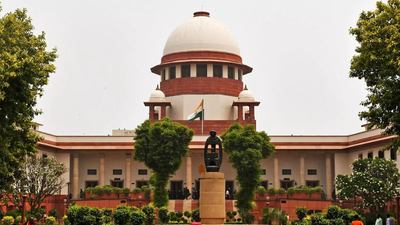
NEW DELHI: The Supreme Court has taken suo motu cognisance of concerns linked to the definition of the Aravali Range, signalling fresh judicial scrutiny of an issue that has sparked protests and debate over mining and environmental protection. According to news agency ANI, a three-judge vacation bench headed by Chief Justice of India Surya Kant will hear the matter on Monday.The court’s decision comes amid widespread concern over how the Aravali hills are being defined for regulatory purposes, particularly in relation to mining activities. The definition accepted earlier by the apex court has triggered objections from environmentalists and civil society groups, who fear it could weaken conservation safeguards for one of India’s oldest mountain systems.The Union environment ministry has moved to address some of these concerns by deciding to further expand areas where mining will be prohibited across the Aravali range. The ministry has directed the Indian Council of Forestry Research and Education (ICFRE) to identify additional landforms and zones where mining should be banned, beyond areas already under restriction.Currently, only about 0.2 per cent of the Aravali’s total area of around 1.4 lakh sq km is eligible for mining, and the new exercise could reduce this further.The ministry has said this step would “further enlarge the coverage of areas protected and prohibited from mining in the entire Aravalis, keeping in mind the local topography, ecology and biodiversity”. States spanning the Aravali range, including Haryana, Rajasthan and Gujarat, have also been told not to grant any new mining leases until a comprehensive Management Plan for Sustainable Mining (MPSM) is finalised.The controversy centres on a 100-metre height-based definition of Aravali hills adopted by the Supreme Court on November 20 for mining-related decisions. Under this definition, a hill is identified as a landform rising 100 metres or more from the lowest enclosing contour, with nearby hills within 500 metres grouped as a range. Environmentalists argue this approach could significantly shrink the area officially recognised as Aravali hills, as much of the range is low-lying.Despite the criticism, the environment ministry has maintained that the new definition does not dilute mining controls and that existing safeguards remain in place. It has also clarified that for mines already in operation, state governments must ensure strict compliance with environmental norms and Supreme Court directions.