
Explained: How Iran war is driving sharp rise in oil and gas prices
Global oil prices surged sharply this week as the war involving Iran intensified raising fears of prolonged disruptions to energy supplies from the Middle East.The spike in prices comes a week after the United States and Israel launched major attacks on Iran, escalating tensions into a wider regional conflict. The ongoing hostilities have disrupted key energy routes and facilities, pushing oil and gas prices higher across global markets.
Oil climbs highest level since 2023
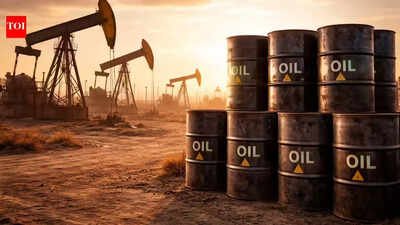
Oil prices continued their rapid climb on Friday, with US crude settling at $90.90 per barrel, up 36% from a week ago. During Friday’s session alone, US crude jumped more than 12% to over $91 per barrel, marking its highest level since late 2022. Since the start of the year, the price of US crude has risen nearly 60%.Meanwhile, Brent crude, the international benchmark, surpassed $94 per barrel, rising more than 9% to its highest level since late 2023. Analysts say the sharp rise reflects growing concerns that the Iran war could trigger a long-term energy supply crisis.
Strait of Hormuz disruption strands oil tankers
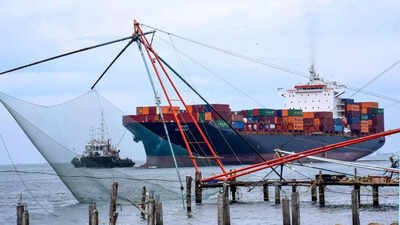
The conflict has severely disrupted shipping through the Strait of Hormuz, a crucial passage that handles a large portion of the world’s oil trade.Nearly 20 million barrels of oil per day typically move through the narrow waterway connecting the Persian Gulf to global markets. However, several tankers have been left stranded in the region amid fears of missile and drone attacks, AP reported.The conflict has also caused damage to oil and gas facilities across the Middle East, interrupting supply flows. A report from The Wall Street Journal said Kuwait had “begun cutting production at some oil fields after running out of room to store its bottled-up crude.”Energy infrastructure has been directly impacted as the conflict widens.Iran launched retaliatory strikes across the region, including a drone attack on the US Embassy in Saudi Arabia, while also hitting a major refinery in Saudi Arabia and a liquefied natural gas (LNG) facility in Qatar.The attacks halted flows of refined products and temporarily took about 20% of the world’s LNG supply offline, according to analysts.Claudio Galimberti, chief economist at Rystad Energy, said the scale of disruptions is growing. “We keep seeing news of vessels being hit or refineries or pipelines, so the list is very long.”He said that around 9 million barrels of oil per day are currently off the market as facilities shut down or producers take precautionary steps. “Right now, with all of this shut in, we are in a situation of extreme deficit,” Galimberti added.
Fuel prices rise for consumers
The surge in oil prices is already pushing up fuel costs for consumers and businesses. In the United States, the price of regular gasoline rose to $3.32 per gallon on Friday, up 11% from a week earlier, according to AAA. Diesel prices climbed 15% to $4.33 per gallon over the same period.Energy markets in Europe and Asia, which rely heavily on Middle Eastern supplies, have been hit even harder. According to Rystad Energy, diesel prices in Europe have doubled, while jet fuel prices in Asia have surged nearly 200% amid the supply disruptions.The conflict has also rattled financial markets. On Friday, the S&P 500 fell more than 1.3%, while the Dow Jones Industrial Average dropped 453 points, or 1%. The Nasdaq Composite declined 1.6%.All three major indexes are now in negative territory for the year, with the Dow recording its worst week since April 2025 and the S&P 500 seeing its worst weekly performance since October.
‘The problem is that in oil trading…’
Earlier this week, US President Donald Trump said American military operations against Iran could last four to five weeks, but added that the United States has “the capability to go far longer.”Trump also appeared to rule out negotiations with Iran unless it agrees to major concessions saying, “There will be no deal with Iran except UNCONDITIONAL SURRENDER!”Al Salazar, head of macro oil and gas research at Enverus, warned that the situation may drag on. “The more news we get, the more it seems like this is going to last a really long time.”To help stabilise maritime trade, Trump announced a plan to insure losses of up to $20 billion for ships operating in the Gulf region. The initiative aims to restore confidence among shipping companies and support businesses operating in the Middle East.However, some experts say financial guarantees alone may not resolve the underlying security concerns.According to AP, Amy Jaffe, director of the Energy, Climate Justice and Sustainability Lab at New York University, said shipping companies remain worried about security threats. “The problem is that in the oil trading, oil shipping world, people are worried about counterterrorism.”“In order for the United States to create the atmosphere that undoes the current bottleneck at the Strait of Hormuz, there has to be some credible demonstration of solutions to the counter-terrorism problem,” Jaffe added.