
US proposes action against 60 countries over forced labour concerns: Why India is on the list
India and the United States may be 99% closer to signing the BTA, but a new proposal from Washington suggests that the trade story isn’t quite finished yet. The United States Trade Representative (USTR) on Wednesday named India among countries that could face additional tariffs over concerns about preventing goods linked to forced labour from entering global supply chains.The proposal follows one of 60 investigations conducted under Section 301 of the US Trade Act of 1974. Based on its findings, the USTR has suggested imposing additional duties of 10% to 12.5% on imports from affected economies. The move comes at a sensitive time, with senior officials from India and the United States currently engaged in a three-day round of trade talks in New Delhi. While the two countries have been working towards a bilateral trade agreement, the latest proposal has added another hurdle to their ongoing trade negotiations.Also read | Amid trade deal talks, US names India in its Section 301 findings; proposes additional duties
Why is India on the list?
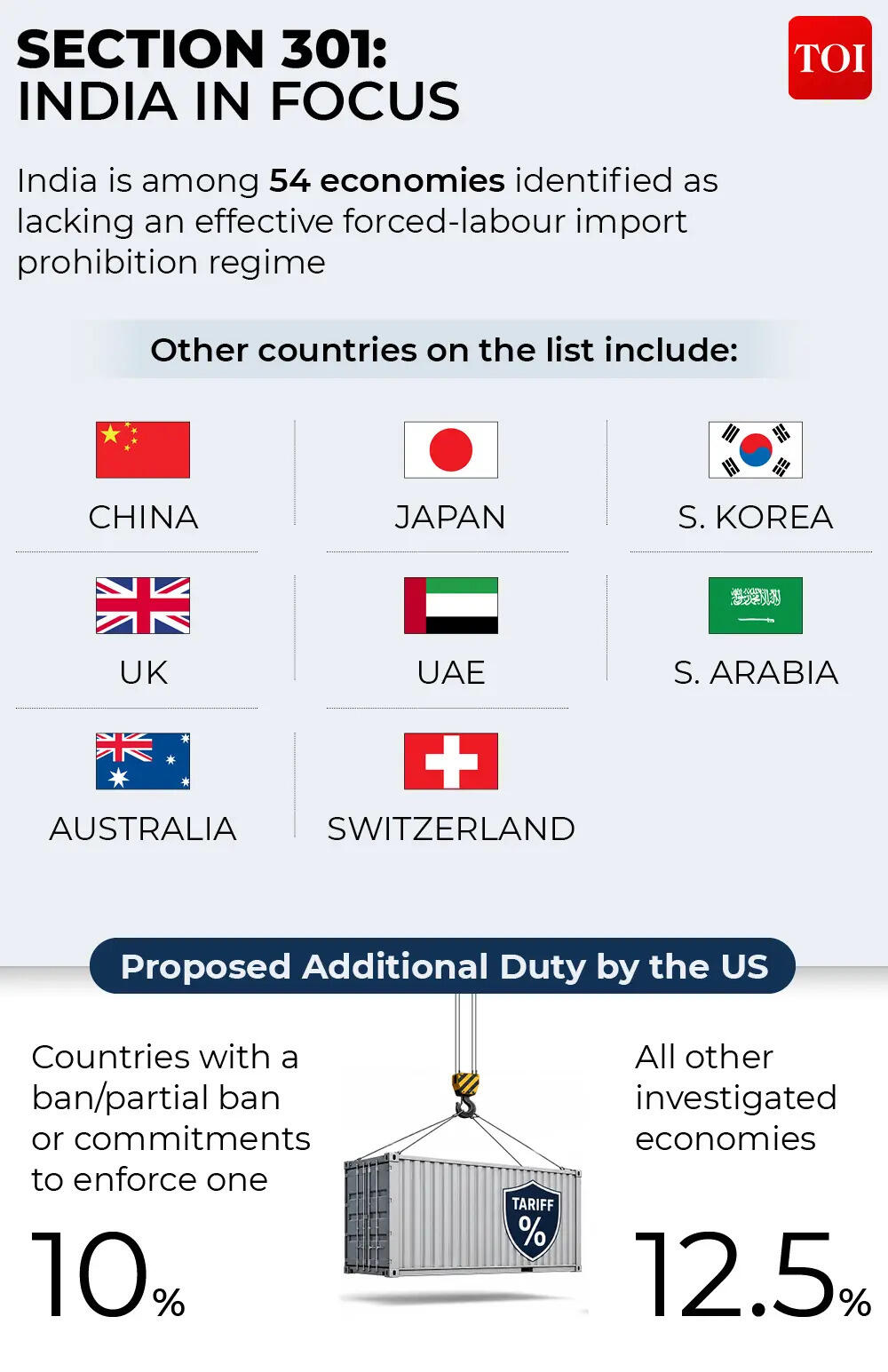
The USTR, in its reports, said, “In sections III.A.7 and III.B.7, USTR found that India has failed to impose and effectively enforce a forced labor import prohibition.” India has been named among 54 economies that, according to the USTR, have failed to impose and effectively enforce a prohibition on the importation of goods produced with forced labour.The report added, “the acts, policies, and practices of India related to the failure to impose and effectively enforce a forced labor import prohibition are unreasonable and burden or restrict US commerce.”The investigation, launched by the USTR in March 2026, covered economies that account for 99.4% of US imports and examined whether countries allow goods produced with forced labour to enter global supply chains.The probe focused on two situations: where forced labour is used directly in the production process, and where countries import inputs allegedly made with forced labour from elsewhere and use them in goods that are subsequently exported to the United States.
According to the think tank Global Trade Research Initiative (GTRI), the focus was on products that use imported inputs from China that are suspected of having been produced using forced labour. If such inputs are used in goods exported from India to the United States, those shipments could come under investigation.For example, India’s solar panel exports to the US often rely on imported polysilicon or solar cells sourced from Chinese supply chains that have faced scrutiny over alleged forced labour in Xinjiang.Similarly, electronics manufacturing in India depends heavily on Chinese components, cables and sub-assemblies, which could be examined if they originate from regions linked to labour-transfer programmes.In the textile and garment sector, Indian manufacturers frequently use Chinese yarns and fabrics, which could face tighter traceability requirements if linked to cotton produced in Xinjiang.Meanwhile, India prohibits forced labour under the Bonded Labour System (Abolition) Act, 1976. However, exporters may still come under scrutiny because many industries depend on imported intermediate goods from China.“India prohibits forced-labour under the Bonded Labour System (Abolition) Act, 1976, it could still face investigations because many Indian export industries rely on imported intermediate inputs from China,” GTRI stated in its report earlier.
What has the USTR proposed?
According to a USTR notification, countries that already prohibit imports linked to forced labour, have committed to introducing such measures under a reciprocal trade arrangement, or maintain a partial framework restricting the entry of certain goods produced through forced labour, would face an additional tariff of 10%.For countries that do not meet these conditions, the proposed additional tariff has been set at 12.5%.
The agency has also proposed a separate mechanism for textiles and apparel that would allow a specified volume of imports from selected economies to enter the US market at a lower Section 301 tariff rate.In announcing the findings, the USTR said it intends to pursue responsive trade actions based on the results of the investigations.“The failure of our most important trading partners to address the importation of goods made with forced labor is unacceptable. This creates a dynamic where American workers are forced to compete globally on an unlevel playing field,” Ambassador Jamieson Greer was quoted as saying.
What is the Section 301?
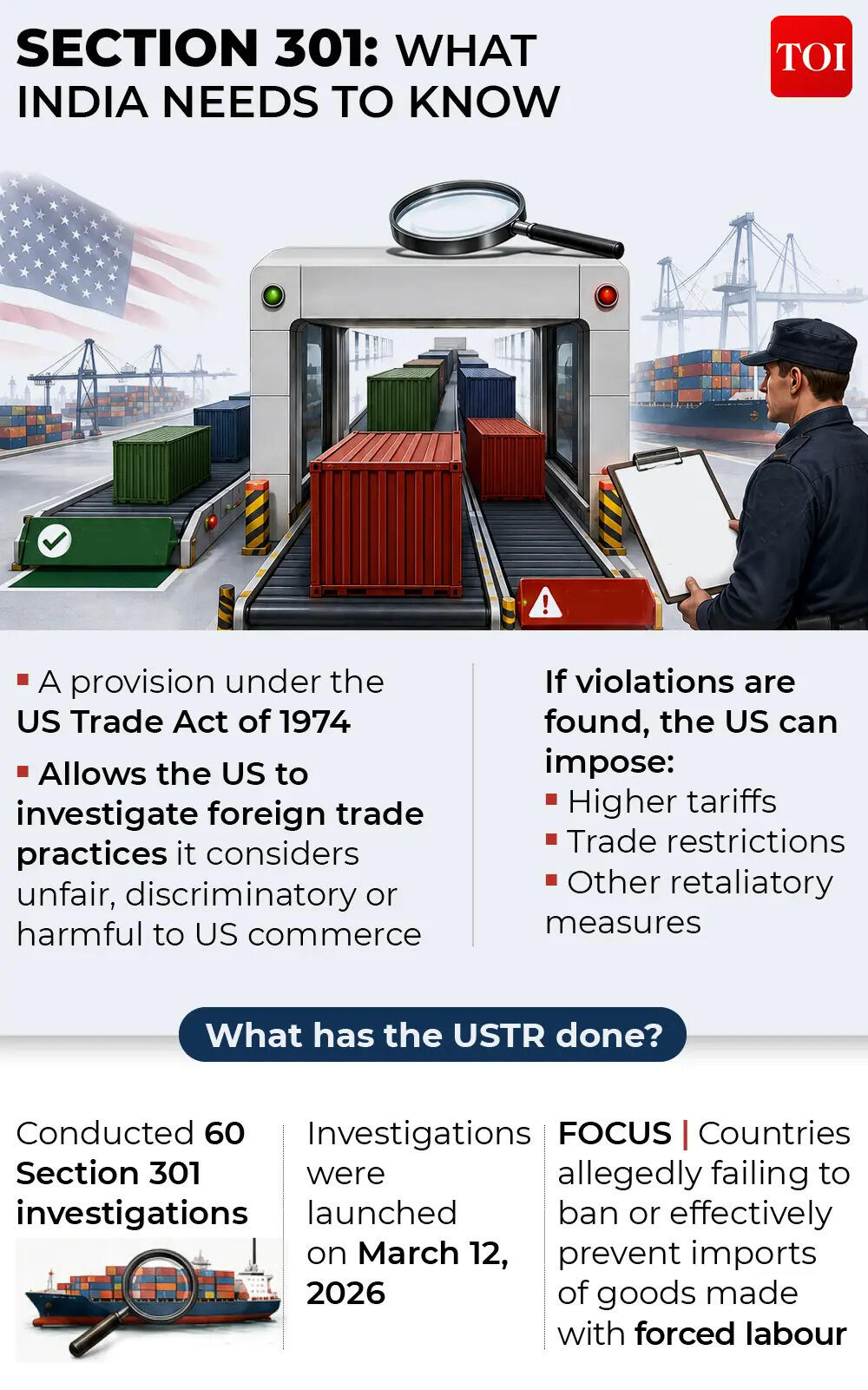
Section 301 is a provision of the US Trade Act of 1974 that authorises the USTR to investigate the trade policies, practices and actions of foreign governments.The purpose is to determine whether those measures are unfair, discriminatory or place an unreasonable burden on US trade and commercial interests.If an investigation finds that a country has engaged in practices considered harmful to US commerce, the provision allows the US administration to take corrective action. These measures can include higher tariffs, trade restrictions or other remedies aimed at addressing the concerns identified during the investigation.